Google and Tate Modern teamed up to produce a collaborative art project that will run for approximately 6 months beginning this week. Commissioned artist have started this forest of animated artwork by planting a "tree", representing an acorn of an animated idea. Collaborators then can add to that seedling, creating more branches as the artwork expands.
I once participated in an evening of collaborative animation which was titled Drinking and Drawing, where anyone who wanted to participate would be given a number of index cards and about 10 minutes to create a sequence based on the last frame of the previous contributor.
This project is much bigger in scope. Once you have collaborated, you can plant your own tree. You don't need to be an animator by training, but you should have an interest in it.
www.exquisiteforest.com
Showing posts with label technology. Show all posts
Showing posts with label technology. Show all posts
Friday, July 20, 2012


Wednesday, April 18, 2012
Thursday, April 12, 2012
BBC Worldwide Invests in HTML5 Company to Expand Mobile Reach
via Gamasutra
In order to release its games on a wide array of mobile platforms, BBC Worldwide has invested an undisclosed sum in the California-based tech company Spaceport.io, which offers tools to help developers launch games via HTML5.
BBC plans to use Spaceport.io's tech to create new games and apps that will run on the web, mobile devices, as well as connected TVs. The company says that this investment will help it reduce development costs and expand its overall reach.
Over the past several years, BBC Worldwide has released numerous titles based on its popular television franchises. Among the most notable are mobile and downloadable games based on series such as Top Gear and Doctor Who.
In order to release its games on a wide array of mobile platforms, BBC Worldwide has invested an undisclosed sum in the California-based tech company Spaceport.io, which offers tools to help developers launch games via HTML5.
BBC plans to use Spaceport.io's tech to create new games and apps that will run on the web, mobile devices, as well as connected TVs. The company says that this investment will help it reduce development costs and expand its overall reach.
Over the past several years, BBC Worldwide has released numerous titles based on its popular television franchises. Among the most notable are mobile and downloadable games based on series such as Top Gear and Doctor Who.
Friday, November 11, 2011
JGC - Carloz Dominguez - Cisco Ambassador, Tech 'nowist'
Surviving, Leading and Thriving in our New World.
- The network effect - he predicts there will be more change in the next 3 years than has happened in the previous 25.
- There has been a role reversal. Consumers now drive the Innovation circle.
- There is an uneven mix of what technology and media consumers use vs what companies will allow them.
- There used to be separate infrastructures for different technologies. Now it's combined - one medium to transmit and receive different types of media and information.
- Movement of consumer consumption to consumer creators.
Examples of change in power
- Arab Spring
- FB movement against FARC
New internet inhabitants
- a tree that has 3000 twitter followers
- a cow transmit 200 mb of info to the net
- a shoe is now connected
- an asthma inhaler is cross-referenced with environmental weather data (gov.data)
- Proteus chip transmits data from your stomach
- sensors on trash study - tracked trash traffic moving around the country! sensor tech is fascinating.
Net Generation
100% digital 100% of the time.
- average # text messages sent by teens every month - 3200
- extremely young iPad users.
- young users expect touch screen / gestural use. we need to adapt to meet this.
- mobility is king
- laptop is still seen as most important device, but the smart device is trending up.
- 33% of companies block facebook, not thinking that people can simply access FB on their mobile devices.
Implications on Business
IBM CEO survey findings:
- all organizations are experiencing significant upheaval. CEO's said it was structurally different, more complex, unstable.
- currently experience a very high level of complexity. All agree it will only continue to rise.
- more than half of CEOs surveyed thought they were not prepared for this complexity.
- all expect continued disruption of one form or other.
In the study, CEOs think the best qualities of a CEOs to be able to adapt..
- creativity
- integrity
- global thinking
- influence
What are characteristics of successful companies?
- adaptability
- adapting to environment
- empowering employees
- fiscal responsibility
- leveraging technology
- customer contribution and feedback
- focus on innovation, experimentation
- communication
- diversity
- understanding future trends
STRATEGIES
- Must be responsive to change.
- Must build a culture of change.
- How do we encourage kids to learn to embrace and adapt change
- Importance of visual interaction and face to face communicatoin (though this comment is also cisco selling their product!)
Cisco Show and Share - allows creation of content, it transcodes to all platforms. Includes auto tagging to make video searchable.
twitter.com/carlosdominguez
- The network effect - he predicts there will be more change in the next 3 years than has happened in the previous 25.
- There has been a role reversal. Consumers now drive the Innovation circle.
- There is an uneven mix of what technology and media consumers use vs what companies will allow them.
- There used to be separate infrastructures for different technologies. Now it's combined - one medium to transmit and receive different types of media and information.
- Movement of consumer consumption to consumer creators.
Examples of change in power
- Arab Spring
- FB movement against FARC
New internet inhabitants
- a tree that has 3000 twitter followers
- a cow transmit 200 mb of info to the net
- a shoe is now connected
- an asthma inhaler is cross-referenced with environmental weather data (gov.data)
- Proteus chip transmits data from your stomach
- sensors on trash study - tracked trash traffic moving around the country! sensor tech is fascinating.
Net Generation
100% digital 100% of the time.
- average # text messages sent by teens every month - 3200
- extremely young iPad users.
- young users expect touch screen / gestural use. we need to adapt to meet this.
- mobility is king
- laptop is still seen as most important device, but the smart device is trending up.
- 33% of companies block facebook, not thinking that people can simply access FB on their mobile devices.
Implications on Business
IBM CEO survey findings:
- all organizations are experiencing significant upheaval. CEO's said it was structurally different, more complex, unstable.
- currently experience a very high level of complexity. All agree it will only continue to rise.
- more than half of CEOs surveyed thought they were not prepared for this complexity.
- all expect continued disruption of one form or other.
In the study, CEOs think the best qualities of a CEOs to be able to adapt..
- creativity
- integrity
- global thinking
- influence
What are characteristics of successful companies?
- adaptability
- adapting to environment
- empowering employees
- fiscal responsibility
- leveraging technology
- customer contribution and feedback
- focus on innovation, experimentation
- communication
- diversity
- understanding future trends
STRATEGIES
- Must be responsive to change.
- Must build a culture of change.
- How do we encourage kids to learn to embrace and adapt change
- Importance of visual interaction and face to face communicatoin (though this comment is also cisco selling their product!)
Cisco Show and Share - allows creation of content, it transcodes to all platforms. Includes auto tagging to make video searchable.
twitter.com/carlosdominguez
Wednesday, September 7, 2011
Graphene photocells could mean hyper-speed internet
The latest study of miracle material graphene shows it could be used to provide a much higher speed internet.
Read article at http://www.reghardware.com/2011/08/31/research_improves_light_capture_and_conversion/
Read article at http://www.reghardware.com/2011/08/31/research_improves_light_capture_and_conversion/
28% of American adults use mobile and social location-based services
(Via Cynopsis Digital)
About one-quarter of American adults use mobile or social location services of some kind, according to a just-released Pew Research Center study. That includes using phones to get directions or recommendations based on the user's location. Use of actual check-ins on services like Foursquare or Gowalla is lower, clocking in at about 5% of mobile phone owners, representing 4% of adults. But about 9% of Internet users check social networks like Facebook or Twitter on their phones. "Americans are not currently all that eager to share explicitly their location on social media sites, but they are taking advantage of their phones' geolocation capabilities in other ways," said Kathryn Zickuhr, Pew Internet Project research specialist and co-author of the report. "Smartphone owners are using their phones to get fast access to location-relevant information on-the-go."
Read full article >>
About one-quarter of American adults use mobile or social location services of some kind, according to a just-released Pew Research Center study. That includes using phones to get directions or recommendations based on the user's location. Use of actual check-ins on services like Foursquare or Gowalla is lower, clocking in at about 5% of mobile phone owners, representing 4% of adults. But about 9% of Internet users check social networks like Facebook or Twitter on their phones. "Americans are not currently all that eager to share explicitly their location on social media sites, but they are taking advantage of their phones' geolocation capabilities in other ways," said Kathryn Zickuhr, Pew Internet Project research specialist and co-author of the report. "Smartphone owners are using their phones to get fast access to location-relevant information on-the-go."
Read full article >>
Wednesday, August 10, 2011
Sunday, June 19, 2011
TDK's see-through screen for mobile devices
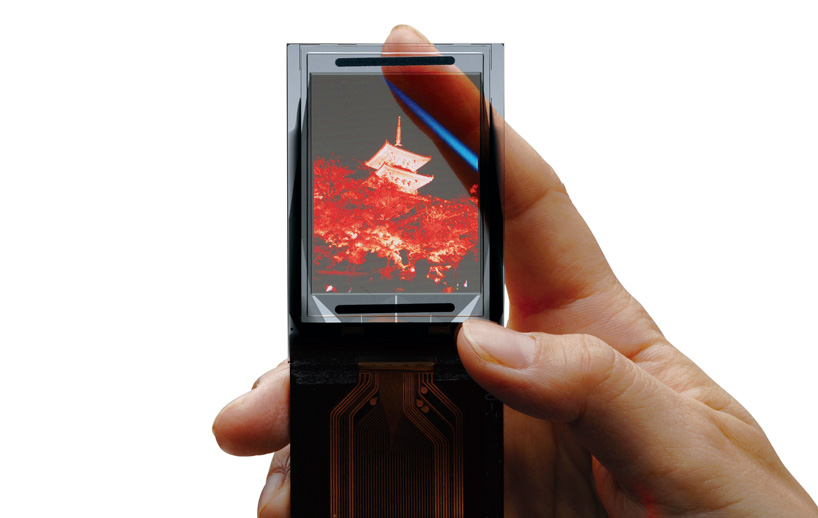
"Japanese electronics company TDK has just begun mass production of the world's first near-transparent, passive matrix organic electroluminescent (EL) display. Organic EL displays use organic materials that emit light in response to an electric current, offering the benefits of a wide viewing angle and high brightness with a see-through screen. the 'UEL476' screen being produced is a 2.4-inch QVGA (320 x 240) display designed for mobile devices, and thus constructed to obscure light transfer through the device, preventing content from being visible from the opposite side. operable in temperatures ranging from -20 to 85 degrees celsius (-4 to 185 degrees fahrenheit), it features 40% transmittance and no colour shifting over the course of its life.
The development opens up numerous design possibilities for mobile devices, especially in the field of augmented reality."
Wednesday, May 11, 2011
Brainwave controlled Cat Ears "Necomimi"
via Crunch Gear
"The wearer concentrates or sees something interesting and the ears stand up. And when you relax, your decreasing brain activity makes the ears fall down."
"The wearer concentrates or sees something interesting and the ears stand up. And when you relax, your decreasing brain activity makes the ears fall down."
Friday, April 29, 2011
Sandbox Summit: CHANGING THE GAMES WE PLAY: A LOOK AHEAD
Stacey Matthias, Founder and co-CEO, Insight Kids and Insight Research Group
After 2 days of hearing educators, policy makers, designers, marketers, and researchers talk about why tech is so important in 21st century classrooms, playful ways it can help with learning, the difference between well-designed games and not, and how to stay "real" in a virtual world, this presentation sorted and summarized highlights, ideas, controversies, etc.
TRUTH
It’s about ‘time’. Many of our students are leaving school before it’s time. Also about time in that we have 24 hour mobile access. We have no down time. How do we create ‘snack’ time? How do we power down? Concern about time spent on screens, concerned if it’s time well spent. A notion of time compression – of instant gratification and instant reward. Not being able to wait for reward and impact. People want more time to play together. This passion and desire for play endures.
‘I play my way’. No matter what we do in this industry, kids will always play their way. Devices or games might not be designed in the way that kids end up using it. One kid said that his favorite part of a specific game was testing it.
‘The Truth of Boundary Smooshing.’ There is a boundary smoosh between digital and physical worlds. Smooshing boundaries between playing to learn and learning to play, between formal and informal learning, smooshing of content, smoosh of who is the creator and who is the player. The smoosh of roles – who is the teacher and who is the student? What it means to move forward in a learner centered culture smooshes the boundaries of education and how we learn within it.
POSSIBILITY
A teacher in a classroom creates rules and norms, then the students follow those rules. Used ‘Simon Says’ as a simple example. Then used another example ‘the mirror game’ can give us a glimpse of what learning might be like in 20 years.
This is different to Simon Says in that there’s no competition, no interruption, it’s intimate, you need to work with your team member, it’s more creative, you have more control. It’s a moment of mutual expression.
The presenter learned this game working with special needs kids who have autism. Encourages kids to make eye contact and tune in to another person’s body language and movement. Also very powerful for grown-ups in the work environment. Says it’s also a metaphor for the possibilities of where we see technology and learning as we have this ‘boundary smoosh’ between the teacher, the creator, the learner, the user.
What’s the hope for how tech will transform kids lives? Some of the people in this presentation said:
- help transform kids lives
- break down barriers
- support each child’s learning
- to make connections
- to give new opportunities
- to accelerate path to be literate citizens
- to allow them ot be producers, not just learners
- to individualize an adaptive learning
- pursue and deepen their interests and passions
- tech will encourage kids to imagine, create and engage
- improve quality of childhood minutes
- tech will bring kids across the world
- help become more aware of opportunities in their lives and make them happen
- helps them become engaged global thinkers
- become collaborative and creative thinkers
How can we play at the edge of innovation and invention?
What is the pop up book of the future?
How can we help kids favore the savor?
How can we help kids move beyond the screen and into the world?
What will be the next apache and Wikipedia?
How do we create flow experiences for learning?
How do we create a LPS? (learning positioning system?)
How do we make learner centered design feasible on a large scale?
How do we reward kids at school for creativity?
How can gestural interfaces help all kids, including those with disabilities?
How does smart design mitigate the pitfalls of tech?
How do we integrate formal and informal learning?
Mine all this mega data and make meaning from it
How can we close gap between kids parents and schools?
What is the difference between process and product?
How do values manifest in the tech that empowers and eduates kids?
Create the playground of the future?
SUMMARY: As industry leaders, creators, producers we must look to:
Face our fears
Clarify our intentions
Play with passion
Trust yourself and your collaborators.
Trust kids.
After 2 days of hearing educators, policy makers, designers, marketers, and researchers talk about why tech is so important in 21st century classrooms, playful ways it can help with learning, the difference between well-designed games and not, and how to stay "real" in a virtual world, this presentation sorted and summarized highlights, ideas, controversies, etc.
TRUTH
It’s about ‘time’. Many of our students are leaving school before it’s time. Also about time in that we have 24 hour mobile access. We have no down time. How do we create ‘snack’ time? How do we power down? Concern about time spent on screens, concerned if it’s time well spent. A notion of time compression – of instant gratification and instant reward. Not being able to wait for reward and impact. People want more time to play together. This passion and desire for play endures.
‘I play my way’. No matter what we do in this industry, kids will always play their way. Devices or games might not be designed in the way that kids end up using it. One kid said that his favorite part of a specific game was testing it.
‘The Truth of Boundary Smooshing.’ There is a boundary smoosh between digital and physical worlds. Smooshing boundaries between playing to learn and learning to play, between formal and informal learning, smooshing of content, smoosh of who is the creator and who is the player. The smoosh of roles – who is the teacher and who is the student? What it means to move forward in a learner centered culture smooshes the boundaries of education and how we learn within it.
POSSIBILITY
A teacher in a classroom creates rules and norms, then the students follow those rules. Used ‘Simon Says’ as a simple example. Then used another example ‘the mirror game’ can give us a glimpse of what learning might be like in 20 years.
This is different to Simon Says in that there’s no competition, no interruption, it’s intimate, you need to work with your team member, it’s more creative, you have more control. It’s a moment of mutual expression.
The presenter learned this game working with special needs kids who have autism. Encourages kids to make eye contact and tune in to another person’s body language and movement. Also very powerful for grown-ups in the work environment. Says it’s also a metaphor for the possibilities of where we see technology and learning as we have this ‘boundary smoosh’ between the teacher, the creator, the learner, the user.
What’s the hope for how tech will transform kids lives? Some of the people in this presentation said:
- help transform kids lives
- break down barriers
- support each child’s learning
- to make connections
- to give new opportunities
- to accelerate path to be literate citizens
- to allow them ot be producers, not just learners
- to individualize an adaptive learning
- pursue and deepen their interests and passions
- tech will encourage kids to imagine, create and engage
- improve quality of childhood minutes
- tech will bring kids across the world
- help become more aware of opportunities in their lives and make them happen
- helps them become engaged global thinkers
- become collaborative and creative thinkers
How can we play at the edge of innovation and invention?
What is the pop up book of the future?
How can we help kids favore the savor?
How can we help kids move beyond the screen and into the world?
What will be the next apache and Wikipedia?
How do we create flow experiences for learning?
How do we create a LPS? (learning positioning system?)
How do we make learner centered design feasible on a large scale?
How do we reward kids at school for creativity?
How can gestural interfaces help all kids, including those with disabilities?
How does smart design mitigate the pitfalls of tech?
How do we integrate formal and informal learning?
Mine all this mega data and make meaning from it
How can we close gap between kids parents and schools?
What is the difference between process and product?
How do values manifest in the tech that empowers and eduates kids?
Create the playground of the future?
SUMMARY: As industry leaders, creators, producers we must look to:
Face our fears
Clarify our intentions
Play with passion
Trust yourself and your collaborators.
Trust kids.
Sandbox Summit: Design for Fun
 What makes a Good Game, and a Game Good
Drew Davidson, Ph.D. (waxebb.com)
Director, Entertainment Technology Center – Pittsburgh, Carnegie Mellon University
He is interested in in-depth ‘close reading’ of games to provide thorough critique and analysis, and capturing the gameplay experience. In addition, it better finds meaning and value. Through this process finds the true value of a game.
Presentation focus:
MINECRAFT – A SNACKABLE INDIE SANDBOX
http://www.minecraft.net/
Winner of a bucketload of awards at GDC this year.
Minecraft procedurally generates worlds. You start a world, and start a day in this world. You can join local servers and have friends play together in this game.
Create a crafting table to gain the ability to have a bigger crafting area, therefore better ability to make.
Varieties of Game Play
How do you measure where you are in your gameplay experience?
Involvement – at a certain point you are just involved in a game. If you can’t hook someone at this level you’ve lost them already.
Immersion – you don’t think about controls, it’s more about ‘doing’
Investment – you cross the line and wan to have a successful completion in this game experience.
Narrative – often like to look at the narrative. We make sense of the world by telling stories about our experienced. This applies to games.
Is it even a game? Yes - because you have to survive (there are zombies at night!)
Minecraft is about creativity and survival. You need to survive. It’s about what you want to do in this world, figure out your own project.
Minecraft is also very snackable, easy to play in short bites.
In this game, there’s 10 minutes of day time, 1.5 mins of sunset, 7 mins of night and 1.5 mins of sunrise.
The game was made by Markus Perrson, made it by himself. He built it publicly to get public feedback. Offered pre-order to testers. He’s now gone to BETA, hired a team of friends, now has 2 million pre-orders. You can play it for free by yourself but pay if you want to do multi player.
Community support via Minepedia and Mods. There’s also a ‘minepedia’ completely created by the community.
Developer has also opened up API for free so people can mod it from the ground up. The code is free – but with the condition that he’ll put cool stuff he likes in his game (eg. Texture packs)
Game is available on PC and Mac. It’s PC game style, old school gameplay boiling down to the core essence of RPGs.
What is Snackable?
- convenient and easy
- time easy
- complete play experience
- reduction of friction into
your life.
What is Post Secret?
- we are in a SPOILER driven culture
- You have to actively avoid things to keep a secret in a game or movie these days.
- Fits into the social networking hemisphere.
What is Literacy and Mastery?
- how people take control of and have ownership of games
- Minecraft was fascinating in terms of development – one guy, developed with the community and he’s made a fortune.
- How does it add up to an experience that has value?
How can we as producers leverage this open source code to find ways to create educational gameplay experiences through minecraft?
Sandbox Summit: The Future of Learning
Diana Rhoten
Cofounder and Managing Editor, Startl
Cited the movie Waiting for Superman that follows five families and their quest to get into better education through the state lottery process.
Says it’s hard to argue with the message and intent of the movie. However she does argue that it’s unimaginative and derivative of the solutions that it offers.
At Startl they’re trying to reframe the problem from one that is about reforming schooling to one that re-imagines the notion of education and learning.
Assumptions and Aspirations
She says solutions are not going to come from policy alone. Facing a design challenge. Solutions will come from environments and rooms, new ideas and new approaches.
Assumption 1 –
Future of education is about learning, not schooling. Needs to be rephrased to think about learning as anywhere, anytime. Retool education with a variety of new models and approaches, like the game initiative ‘Vanished’.
Assumption 2 –
We believe technology has a critical role in the future but it’s not a means to an end.
Concept of technology as being important to schooling is not new. Most recent technologies have been about improving the efficiency of schooling rather than the efficacy of learning. They are thinking about the learning.
Assumption 3 –
Power of tech to advance learning really depends on the context and the practice of use. Don’t believe technology is ever the silver bullet. Tech is a tool and it’s effect on learning depends on the people that use them, how the use them and where they use them.
Just as we design new tech we also design new contexts for those techs.
Aspirations:
1. Want to be disruptive and shock the system. Bring to life concrete real life examples of what the future could look like.
2. See their work as taking place on the edge – where the risk of failure and the opportunity for success are most allowable.
3. They want to work with thinkers, doers, makers and movers beyond the usual suspects. Recruit talented people who may not have necessarily seen themselves in this education system.
Technology and Theory
Tech will revolutionize education – this has been known since the 70s. Yet in schools there is still little evidence of a structural revolution in terms of tech.
The theories that people have about learning are grounded in what it means to be educated and skilled – in her opinion much of this is influenced by behaviorism and cognitivism. Believe knowledge is external and objective, that students should learn the same knowledge in the same amount of time, with standard models. This basic model has not changed.
How do we make it a learner centric model? This would involve interaction, exploration, collaboration and co-production. They look for products on the market that support this concept. Help learners become producers and not just consumers of information and knowledge.
At Startl, they want to focus on tech and the theory that can lead to change the way we approach education in this country. What does it mean to be knowledgeable in the 21st Century?
Haven’t come up with a framework for where education is headed.
Quoted: It is the framework that changes with new technology and not just the picture of the frame.
Programs and Products
Valley of Death in education. Traversing this valley requires talent to fuel promising innovations.
What do they want to explore?
- Play and learning through interaction
- Products that are learning rich and market smart.
- Help support entrepreneurs as they develop their products.
Partnered with IDEO, DreamIT, Sundance to help figure out business models and strategies for emerging businesses.
IDEO is their ‘design boost’, DreamIT is their ‘acecelerator’, Sundance becomes the ‘broker, tastemaker’.
They run a variety of showcases that companies can apply to – they focus on companies they consider to be smart capital. Sundance, through it’s channel has offered a variety of distribution pathways. How can they go direct to the learner and get around old ‘channels’ such as book publishers?
Also engaging with youth become platform testers. Eg. New Youth City learning Network.
Examples of products that have come out recently
Mind Snacks - multiplatform learning games
Toontastic - enables young kids to have an interactive experience about play and narrative, but also teaches about arc of narrative and storytelling.
Project Noah - a mobile tool that professionals and amateurs use to explore in a fun way their local habitat and wildlife.
Cofounder and Managing Editor, Startl
Cited the movie Waiting for Superman that follows five families and their quest to get into better education through the state lottery process.
Says it’s hard to argue with the message and intent of the movie. However she does argue that it’s unimaginative and derivative of the solutions that it offers.
At Startl they’re trying to reframe the problem from one that is about reforming schooling to one that re-imagines the notion of education and learning.
Assumptions and Aspirations
She says solutions are not going to come from policy alone. Facing a design challenge. Solutions will come from environments and rooms, new ideas and new approaches.
Assumption 1 –
Future of education is about learning, not schooling. Needs to be rephrased to think about learning as anywhere, anytime. Retool education with a variety of new models and approaches, like the game initiative ‘Vanished’.
Assumption 2 –
We believe technology has a critical role in the future but it’s not a means to an end.
Concept of technology as being important to schooling is not new. Most recent technologies have been about improving the efficiency of schooling rather than the efficacy of learning. They are thinking about the learning.
Assumption 3 –
Power of tech to advance learning really depends on the context and the practice of use. Don’t believe technology is ever the silver bullet. Tech is a tool and it’s effect on learning depends on the people that use them, how the use them and where they use them.
Just as we design new tech we also design new contexts for those techs.
Aspirations:
1. Want to be disruptive and shock the system. Bring to life concrete real life examples of what the future could look like.
2. See their work as taking place on the edge – where the risk of failure and the opportunity for success are most allowable.
3. They want to work with thinkers, doers, makers and movers beyond the usual suspects. Recruit talented people who may not have necessarily seen themselves in this education system.
Technology and Theory
Tech will revolutionize education – this has been known since the 70s. Yet in schools there is still little evidence of a structural revolution in terms of tech.
The theories that people have about learning are grounded in what it means to be educated and skilled – in her opinion much of this is influenced by behaviorism and cognitivism. Believe knowledge is external and objective, that students should learn the same knowledge in the same amount of time, with standard models. This basic model has not changed.
How do we make it a learner centric model? This would involve interaction, exploration, collaboration and co-production. They look for products on the market that support this concept. Help learners become producers and not just consumers of information and knowledge.
At Startl, they want to focus on tech and the theory that can lead to change the way we approach education in this country. What does it mean to be knowledgeable in the 21st Century?
Haven’t come up with a framework for where education is headed.
Quoted: It is the framework that changes with new technology and not just the picture of the frame.
Programs and Products
Valley of Death in education. Traversing this valley requires talent to fuel promising innovations.
What do they want to explore?
- Play and learning through interaction
- Products that are learning rich and market smart.
- Help support entrepreneurs as they develop their products.
Partnered with IDEO, DreamIT, Sundance to help figure out business models and strategies for emerging businesses.
IDEO is their ‘design boost’, DreamIT is their ‘acecelerator’, Sundance becomes the ‘broker, tastemaker’.
They run a variety of showcases that companies can apply to – they focus on companies they consider to be smart capital. Sundance, through it’s channel has offered a variety of distribution pathways. How can they go direct to the learner and get around old ‘channels’ such as book publishers?
Also engaging with youth become platform testers. Eg. New Youth City learning Network.
Examples of products that have come out recently
Mind Snacks - multiplatform learning games
Toontastic - enables young kids to have an interactive experience about play and narrative, but also teaches about arc of narrative and storytelling.
Project Noah - a mobile tool that professionals and amateurs use to explore in a fun way their local habitat and wildlife.
Thursday, April 28, 2011
Sandbox Summit: WHERE THE WIRED THINGS ARE: A DAY IN THE LIFE OF A MODERN FAMILY
WHERE THE WIRED THINGS ARE: A DAY IN THE LIFE OF A MODERN FAMILY
Vanessa Van Petten, Youthologist and Author
Website: Radical Parenting – a website for parents written by kids.
- Her website has 120 teen interns.
- Created term ‘Youthology’ – aggregate the best studies from around the world, - translate into bite sized pieces to give to parents, educators and educators.
What technology do her readers find has most changed family routine? These were based on reader submissions, here were some of the common devices / sites mentioned.
MORNING
- sites like relishrelish.com (meal planner and tracker).
- Facebook, Twitter for checking updates
- Xbox – incorporating games during daily routine
- Skype
- SmartPhones (reading updates, watch videos, play games).
- iKibble (tracks pet food, meds etc)
- Zimride app for car pools
- Everyone checks their PlumLife! It’s a family online management system. Even sends out individual schedule notices such as ‘take out the trash’
AFTER SCHOOL
- RedRover or Skype Playdate (RedRover is an app that lets school families notify if you want to have a playdate).
- Virtual Worlds and games
- Drawing or playing on phone or iPad.
- Tech is also changing religious endeavours (eg. Bar Mitzvah with cantor in other states)
- TeacherTube / Khan Academy to help with homework.
- SAT prep via Adapster (vocab tracker)
- Tigertext is very popular amongst tweens – as soon as text is received it’s deleted after 4 minutes from BOTH phones.
- Some moms use SticKK – if you don’t achieve your goals you need to pay money to charity.
- WebMD.
- Texting (used examples of texting a child that dinner is ready so they didn’t have to scream)
- iGuardian is an app that tracks your child’s driving and sends reports back to parents.
- iCurfew is a similar app – but once you get to a location it sends the location automatically to your parents.
AFTER DINNER
- play Wii or Kinect
- use rottentomatoes to check out ratings for movies.
- Set up a ‘Synch-Tube’ - Chatting alongside watching vides –
- RunPee.com – tells you the best time to go to the toilet during a movie.
BEDTIME
- bedtime stories app
- skype (for family members away from home)
SOME FACEBOOK FACTS
60% of people stalk crushes
40% decide not to date someone if profile not cool
21% would break up with someone by changing facebook status
10% of people have been dumped over facebook.
Many people loved ex-blocker – an app that removes all mentions of your ex from facebook!
HOW THE DIGITAL DAY IS CHANGING US
The Good:
- ease and efficiency
- access
- help
- connectivity
- new kind of family together time.
The Bad:
- no off-time
- less mind wandering (daydreaming time)
- no boundaries – no off time between social life, home life and school life.
- Insomnia – kids text in the middle of the night. Average of 34 texts after bedtime.
- Kids are having trouble defining the difference between quality connections vs quantity (no undersanding value of ‘true’ friends vs ‘technology-made’ friends)
- Studies showed the more screen-time, there were more feelings reported of sadness and negativity. Online, they feel like they are connecting but there is nothing of substance being said. Compared it to cotton candy!
- Social illiteracy and miscues – need to teach social and digital literacy. Social miscues are astounding .
- New social cues – referred it to ‘flirting’ vs ‘e-flirting’.
WHAT WE CAN DO
- design digital play to be more enduring – need to work at it.
- Digital literacy must be taught alongside social literacy
- Help bring back boundaries and balance:
o Sleep should stay precious. Keep devices downstairs.
o No Electronic Zones (eg dining room) and Awesome Electronic Zones (eg play room).
o No Electronic Times and Creative Electronic Times.
- use and make technology that is imaginative and interactive (cited geo-caching), games that are online/real life back and forth, creating your own rules with the device, hide and seek apps.
- parent integration and spaces for parental involvement.
Vanessa Van Petten, Youthologist and Author
Website: Radical Parenting – a website for parents written by kids.
- Her website has 120 teen interns.
- Created term ‘Youthology’ – aggregate the best studies from around the world, - translate into bite sized pieces to give to parents, educators and educators.
What technology do her readers find has most changed family routine? These were based on reader submissions, here were some of the common devices / sites mentioned.
MORNING
- sites like relishrelish.com (meal planner and tracker).
- Facebook, Twitter for checking updates
- Xbox – incorporating games during daily routine
- Skype
- SmartPhones (reading updates, watch videos, play games).
- iKibble (tracks pet food, meds etc)
- Zimride app for car pools
- Everyone checks their PlumLife! It’s a family online management system. Even sends out individual schedule notices such as ‘take out the trash’
AFTER SCHOOL
- RedRover or Skype Playdate (RedRover is an app that lets school families notify if you want to have a playdate).
- Virtual Worlds and games
- Drawing or playing on phone or iPad.
- Tech is also changing religious endeavours (eg. Bar Mitzvah with cantor in other states)
- TeacherTube / Khan Academy to help with homework.
- SAT prep via Adapster (vocab tracker)
- Tigertext is very popular amongst tweens – as soon as text is received it’s deleted after 4 minutes from BOTH phones.
- Some moms use SticKK – if you don’t achieve your goals you need to pay money to charity.
- WebMD.
- Texting (used examples of texting a child that dinner is ready so they didn’t have to scream)
- iGuardian is an app that tracks your child’s driving and sends reports back to parents.
- iCurfew is a similar app – but once you get to a location it sends the location automatically to your parents.
AFTER DINNER
- play Wii or Kinect
- use rottentomatoes to check out ratings for movies.
- Set up a ‘Synch-Tube’ - Chatting alongside watching vides –
- RunPee.com – tells you the best time to go to the toilet during a movie.
BEDTIME
- bedtime stories app
- skype (for family members away from home)
SOME FACEBOOK FACTS
60% of people stalk crushes
40% decide not to date someone if profile not cool
21% would break up with someone by changing facebook status
10% of people have been dumped over facebook.
Many people loved ex-blocker – an app that removes all mentions of your ex from facebook!
HOW THE DIGITAL DAY IS CHANGING US
The Good:
- ease and efficiency
- access
- help
- connectivity
- new kind of family together time.
The Bad:
- no off-time
- less mind wandering (daydreaming time)
- no boundaries – no off time between social life, home life and school life.
- Insomnia – kids text in the middle of the night. Average of 34 texts after bedtime.
- Kids are having trouble defining the difference between quality connections vs quantity (no undersanding value of ‘true’ friends vs ‘technology-made’ friends)
- Studies showed the more screen-time, there were more feelings reported of sadness and negativity. Online, they feel like they are connecting but there is nothing of substance being said. Compared it to cotton candy!
- Social illiteracy and miscues – need to teach social and digital literacy. Social miscues are astounding .
- New social cues – referred it to ‘flirting’ vs ‘e-flirting’.
WHAT WE CAN DO
- design digital play to be more enduring – need to work at it.
- Digital literacy must be taught alongside social literacy
- Help bring back boundaries and balance:
o Sleep should stay precious. Keep devices downstairs.
o No Electronic Zones (eg dining room) and Awesome Electronic Zones (eg play room).
o No Electronic Times and Creative Electronic Times.
- use and make technology that is imaginative and interactive (cited geo-caching), games that are online/real life back and forth, creating your own rules with the device, hide and seek apps.
- parent integration and spaces for parental involvement.
Sandbox Summit: PERMISSION TO PLAY: GAME CHANGING RESEARCH
PERMISSION TO PLAY: GAME CHANGING RESEARCH
Jane Gould, Senior Vice President, Consumer Insights, Nickelodeon
Started out wanting to know what the state of play was with parents and kids.
Went into this research knowing that Nickelodeon are not play experts, they are kid and family experts.
First went to experts, then went into 200 households across the country. Spent entire days at each of these moments to note down everyday moments. Then quantified what the saw with 1300 households around the country.
PLAY ACROSS THE AGES
Wanted to compare how play was when the parents were growing up. Play across different ages of kids (2-17)
Takeaways was that time has in fact changed play. Does not look like what it used to. However play looks different but it doesn’t mean it’s different and ‘bad’.
Academic play patterns haven’t changed. Six basic academic patterns remain the same:
– social play
– Attunement
– body movement
– imiagination
– object play
– narrative.
It’s true - girls want to nurture, boys want to destroy. This is indeed the cas.e Girls wasn’t to care for babies, flowers, cooperation etc. Boys want to kill, domination, competition ‘a matter of life and death!’
Parents feel their play as a kid was different.
Eg. 72% parents often say it’s more dangerous to play outside then they were young
Competitive play has changed – used to be seasonal , skill development, team work. Speaking to sports coaches, hear about year-round activities, time intenstive obligation, future plans, adult dominated. Now they understand why ‘silent soccer league’ had been created.
KIDS LIKE TO PLAY
Play is incredibly fundamental. Kids like it, want to do more of it. But kept hearing it’s not as easy as it sounds. Many barriers to what kids think of as ‘play’.
This is a generation of non-linear kids. Everything can be re-done, started, stopped, paused. You can come into games at any point and participate the way you choose to.
Changes in play observed by adults are just reality for kids and this reality is filled with excitement for them.
The old saying of ‘a time and a place for everything’ really doesn’t exist anymore for play – it is all the time, it is available any time.
Is play actually fun? Their qualatitive research say it is!
Most popular types for parents:
1. fun
2. social
3. challenging
4. problem solving
Kids wish they didn’t have to plan ahead to have time to play with friends. They want more spontaneous, kid-directed play. Kids prefer to play something where they get to make up the rules or instructions, rather than playing something that already has rules or instructions.
Kids want more outdoor play. 69% kids would prefer to playoutside over play inside. 85% kids love or like play where they get to be outside . 49% of kids agree if they could, they would always play outside.
FORCES AGAINST PLAY
Adult focus on purpose and outcomes – experts and parents all believe that all play must have a purpose. However most kids believe that purpose is the antithesis of play. For kids the process is the desired outcome.
More than half of all parents agree there’s too much focus on learning during play, kids should just get to have fun.
Schools are giving less time to and emphasis on play. Parents are looking to institutions to fix things for them and schools came up in research again and again. Government and schools are de-prioritizing play. Obsessing over standardized tests, and funding that is granted as a result.
Time bankruptcy: there’s more homework, increased curricular activities, ruse of dual earner and single parent households. Parents schedules are a bigger obastacle than kids. While 34% parents say that kids are too busy so playimte needs to be scheduled, but they mostly all agree it should NOT be scheduled.
Neighborhood erosion:
Fear and safety are a prime concern for kids. Protecting your child means play tie is not as free and easy as it used to be. More parental supervision so therefore less playtime, more time spent being locked in the house.
Adults being the Play Police:
More often than not, parents tend to have a negative impact on play – over prescribing, over scheduling, over thinking. Educators are too focused on test scores. Coaches pressure kids to win at all costs. 70% parents say structured play with rules of guidelines to follow keep kids out of danger.
Parents do see a need for child-directed opportunities. There’s no need for expensive and specialty toys. Yet parents still crave learning outcomes from play. For kids, purpose is process and outcome is bonus.
TECHNOLOGY AS FRIEND AND FOE
Technology is both the unifier and the divider. It’s the ultimate snack-sized play.
The link between virtual and physical play is always sought but finally close to being delivered. This is the moment when it’s all coming together.
It’s very clear that both kids and parents are drawn to tech based play. Parents lack clarity in knowing when tech based play is good or bad – they want help and want to know more about the rules on how to guide.
The moment has come where tech and digital play has saturdated kids lives, more likely than to be done than any physical activity. 91& kids play some kind of video games regularly. 78% kids play some type of physical game regularly.
Tech devices serve many roles for kids and parents. Devices are used by parents as a babysitter, a pacifier. Pass-back. Parents know they’ve done it from an informed place – they know what the child is about to play.
For kids it helps kids and tweens stay connected with each other, perfect for solitary or group enjoyment.
But parents do have love / hate relationship. Parents told research they prefer kids to play in traditional play activities. They say they set rules around amount of digital play. But what they also tell research is that kids don’t know how to entertain themselves without technology or media. For parents, video games don’t count as ‘real play’.
Many parents used a term called ‘play play’ – parents say technology doesn’t allow for ‘play play’ to happen.
Self-guided play is taking a back-seat to scripted play. A memory of what parents did when they were young vs what kids are doing now. Parents are not seeing how creative a kid needs to be to survive in that world is key.
FAMILY PLAY
All family play is important to parents. Taking the time to family play is often more thought about than acted upon.
Today’s parents play more with their kids than with previous generations.
Parents and kids value family play – 56% say playing with parents is just as fun as playing with friends.
According to parents important play companions are first, then playing with family is important. This is also for kids – this research was up to the age of 17.
There are different types of parent play. Parents and kids versions of play can be different. Parents often ‘half play’. Encouragement can also lead to pressure.
Board games are still at the heart of family play. Parents and kids still want to interact. Then it’s different types of play with different types of family members.
Mom and dad are definitely different – mom is the connector, the social co-ordinator, the moderator, the care giver. Dad is the buddy, the techy, the coach, the softie. Research showed that moms are never the first point for fun!
There’s a desire for more parent, whole family and grandparent play. This is across the board in research.
THE PLAY BOOK
Parents and experts are worried:
- will imagination be a thing of the past?
- Will kids get and be more obese?
- Will brains fry with too much screen time
- How to fit in more family play?
- How do we get them outside
- How do we keep kids safe?
- How can kids take back control of play?
Play as fun
- too much focused on structured activities
- too many easy go-to activities that are not productive
- outdoor time lacking
- not enough interactivity and imagination.
Consumer needs
- opportunities for kids direction
- real world experiences
- healthier options
- creative expression
- more family connections
- ability to be transformed
- immediate gratification
- more merging of reality and digital
OPPORTUNITY
Take benefits of digital structured world of play. Bring it together with traditional unstructured play to take advantage of what’s needed for this kids. How to push these two things together?
THE PERFECT PLAY EXPERIENCE
- Physical activity
- Involvement of whole family
- Kids to call the shots and use imagination
- Connect to larger world
- Ease of use
- Safety
- Physical social emotional or creative benefits
- Needs to be fun.
Jane Gould, Senior Vice President, Consumer Insights, Nickelodeon
Started out wanting to know what the state of play was with parents and kids.
Went into this research knowing that Nickelodeon are not play experts, they are kid and family experts.
First went to experts, then went into 200 households across the country. Spent entire days at each of these moments to note down everyday moments. Then quantified what the saw with 1300 households around the country.
PLAY ACROSS THE AGES
Wanted to compare how play was when the parents were growing up. Play across different ages of kids (2-17)
Takeaways was that time has in fact changed play. Does not look like what it used to. However play looks different but it doesn’t mean it’s different and ‘bad’.
Academic play patterns haven’t changed. Six basic academic patterns remain the same:
– social play
– Attunement
– body movement
– imiagination
– object play
– narrative.
It’s true - girls want to nurture, boys want to destroy. This is indeed the cas.e Girls wasn’t to care for babies, flowers, cooperation etc. Boys want to kill, domination, competition ‘a matter of life and death!’
Parents feel their play as a kid was different.
Eg. 72% parents often say it’s more dangerous to play outside then they were young
Competitive play has changed – used to be seasonal , skill development, team work. Speaking to sports coaches, hear about year-round activities, time intenstive obligation, future plans, adult dominated. Now they understand why ‘silent soccer league’ had been created.
KIDS LIKE TO PLAY
Play is incredibly fundamental. Kids like it, want to do more of it. But kept hearing it’s not as easy as it sounds. Many barriers to what kids think of as ‘play’.
This is a generation of non-linear kids. Everything can be re-done, started, stopped, paused. You can come into games at any point and participate the way you choose to.
Changes in play observed by adults are just reality for kids and this reality is filled with excitement for them.
The old saying of ‘a time and a place for everything’ really doesn’t exist anymore for play – it is all the time, it is available any time.
Is play actually fun? Their qualatitive research say it is!
Most popular types for parents:
1. fun
2. social
3. challenging
4. problem solving
Kids wish they didn’t have to plan ahead to have time to play with friends. They want more spontaneous, kid-directed play. Kids prefer to play something where they get to make up the rules or instructions, rather than playing something that already has rules or instructions.
Kids want more outdoor play. 69% kids would prefer to playoutside over play inside. 85% kids love or like play where they get to be outside . 49% of kids agree if they could, they would always play outside.
FORCES AGAINST PLAY
Adult focus on purpose and outcomes – experts and parents all believe that all play must have a purpose. However most kids believe that purpose is the antithesis of play. For kids the process is the desired outcome.
More than half of all parents agree there’s too much focus on learning during play, kids should just get to have fun.
Schools are giving less time to and emphasis on play. Parents are looking to institutions to fix things for them and schools came up in research again and again. Government and schools are de-prioritizing play. Obsessing over standardized tests, and funding that is granted as a result.
Time bankruptcy: there’s more homework, increased curricular activities, ruse of dual earner and single parent households. Parents schedules are a bigger obastacle than kids. While 34% parents say that kids are too busy so playimte needs to be scheduled, but they mostly all agree it should NOT be scheduled.
Neighborhood erosion:
Fear and safety are a prime concern for kids. Protecting your child means play tie is not as free and easy as it used to be. More parental supervision so therefore less playtime, more time spent being locked in the house.
Adults being the Play Police:
More often than not, parents tend to have a negative impact on play – over prescribing, over scheduling, over thinking. Educators are too focused on test scores. Coaches pressure kids to win at all costs. 70% parents say structured play with rules of guidelines to follow keep kids out of danger.
Parents do see a need for child-directed opportunities. There’s no need for expensive and specialty toys. Yet parents still crave learning outcomes from play. For kids, purpose is process and outcome is bonus.
TECHNOLOGY AS FRIEND AND FOE
Technology is both the unifier and the divider. It’s the ultimate snack-sized play.
The link between virtual and physical play is always sought but finally close to being delivered. This is the moment when it’s all coming together.
It’s very clear that both kids and parents are drawn to tech based play. Parents lack clarity in knowing when tech based play is good or bad – they want help and want to know more about the rules on how to guide.
The moment has come where tech and digital play has saturdated kids lives, more likely than to be done than any physical activity. 91& kids play some kind of video games regularly. 78% kids play some type of physical game regularly.
Tech devices serve many roles for kids and parents. Devices are used by parents as a babysitter, a pacifier. Pass-back. Parents know they’ve done it from an informed place – they know what the child is about to play.
For kids it helps kids and tweens stay connected with each other, perfect for solitary or group enjoyment.
But parents do have love / hate relationship. Parents told research they prefer kids to play in traditional play activities. They say they set rules around amount of digital play. But what they also tell research is that kids don’t know how to entertain themselves without technology or media. For parents, video games don’t count as ‘real play’.
Many parents used a term called ‘play play’ – parents say technology doesn’t allow for ‘play play’ to happen.
Self-guided play is taking a back-seat to scripted play. A memory of what parents did when they were young vs what kids are doing now. Parents are not seeing how creative a kid needs to be to survive in that world is key.
FAMILY PLAY
All family play is important to parents. Taking the time to family play is often more thought about than acted upon.
Today’s parents play more with their kids than with previous generations.
Parents and kids value family play – 56% say playing with parents is just as fun as playing with friends.
According to parents important play companions are first, then playing with family is important. This is also for kids – this research was up to the age of 17.
There are different types of parent play. Parents and kids versions of play can be different. Parents often ‘half play’. Encouragement can also lead to pressure.
Board games are still at the heart of family play. Parents and kids still want to interact. Then it’s different types of play with different types of family members.
Mom and dad are definitely different – mom is the connector, the social co-ordinator, the moderator, the care giver. Dad is the buddy, the techy, the coach, the softie. Research showed that moms are never the first point for fun!
There’s a desire for more parent, whole family and grandparent play. This is across the board in research.
THE PLAY BOOK
Parents and experts are worried:
- will imagination be a thing of the past?
- Will kids get and be more obese?
- Will brains fry with too much screen time
- How to fit in more family play?
- How do we get them outside
- How do we keep kids safe?
- How can kids take back control of play?
Play as fun
- too much focused on structured activities
- too many easy go-to activities that are not productive
- outdoor time lacking
- not enough interactivity and imagination.
Consumer needs
- opportunities for kids direction
- real world experiences
- healthier options
- creative expression
- more family connections
- ability to be transformed
- immediate gratification
- more merging of reality and digital
OPPORTUNITY
Take benefits of digital structured world of play. Bring it together with traditional unstructured play to take advantage of what’s needed for this kids. How to push these two things together?
THE PERFECT PLAY EXPERIENCE
- Physical activity
- Involvement of whole family
- Kids to call the shots and use imagination
- Connect to larger world
- Ease of use
- Safety
- Physical social emotional or creative benefits
- Needs to be fun.
Sandbox Summit: Where is Technology Not Working?
Panel Discussion
Moderator: Alan Gershenfeld, Founder and President, E-Line Media
Panelists: Wendy Bronfin, Director, Product Management at Barnes & Noble; Sara DeWitt, Vice President of PBSKids Interactive; Rachel Schiff, Senior Program Manager, Microsoft Interactive Entertainment
Devices: If you buy technology to help kids to read, you still need to encourage them to read. You can't just hand them a device and expect them to automatically learn. Make sure they're not getting lazy and browsing YouTube.
Put something you want them to learn in front of them. Just because they use technology doesn't mean they're doing it in an effective and productive way.
If you have technology games or books, try and add in real-world activities. Making sure your digital world encompasses more than just the screen time aspect.
Parent Child Interaction: PBS Kids did eye tracking testing, realized there was a real break with kids younger than 6.5 if a video came up anywhere on the screen, they zoned in on the video and stopped doing anything else. Older kids tended to pause the video to get on with their task at hand.
Thinking about leaving breadcrumbs for parents - finding ways to bring parents into the experience later. eg. Martha Speaks, they had an associated app where parents could record what kids were doing in the game. Simple example: leave something for the parent elsewhere on device (such as saved photos from game to photo gallery).
Q: Well Roundedness: What do you do to encourage well roundedness in kids?
A: Was a scholastic research report on time kids reading books for fun and doing things for fun. As they get older, do less reading activity and more time in gaming and then cell phone use becomes more pervasive use of their time. Suggests making compelling content to help.
See what other kids are doing in different ways - different collaboration networks. Follow kids interests through technology - how can we push them to something in the real world? How many of games kids build are things they're very passionate about? How to get them active in this passion outside of digital environment?
Q: What do you think should be kept sacred in the 'real world'
A: It's not an either / or - one person said if you live in boston, you know a lot of stuff is done inside in the winter! Do as much as you can in real world. Also up to the parent to encourage that real world experience.
Nook lady - reading bedtime stories to your child. SOmetimes digital books can inspire a better experience for kids at bedtime - digital media enhances that experience that parents and kids love doing together. It's not about either / or - but how to compliment.
Q: What do you think about when you are designing games for kids interests without pigeonholing them? There are stereotypes about how boys vs girls play games. Eg. sometimes theme might be more interesting for a boy, but how do you make it interesting also for girls?
GameStar Mechanic: they found at late elementary and middle-school age, both girls and boys were engaged in product. Found girls made games very differently at the beginning, but the end product was similar. Found it very difficult to get girls engaged in construction of a product at the 9th grade.
Alot of girls who engage in product, want to go into digital games focus on storytelling narrative of gameplay.
Moderator: Alan Gershenfeld, Founder and President, E-Line Media
Panelists: Wendy Bronfin, Director, Product Management at Barnes & Noble; Sara DeWitt, Vice President of PBSKids Interactive; Rachel Schiff, Senior Program Manager, Microsoft Interactive Entertainment
Devices: If you buy technology to help kids to read, you still need to encourage them to read. You can't just hand them a device and expect them to automatically learn. Make sure they're not getting lazy and browsing YouTube.
Put something you want them to learn in front of them. Just because they use technology doesn't mean they're doing it in an effective and productive way.
If you have technology games or books, try and add in real-world activities. Making sure your digital world encompasses more than just the screen time aspect.
Parent Child Interaction: PBS Kids did eye tracking testing, realized there was a real break with kids younger than 6.5 if a video came up anywhere on the screen, they zoned in on the video and stopped doing anything else. Older kids tended to pause the video to get on with their task at hand.
Thinking about leaving breadcrumbs for parents - finding ways to bring parents into the experience later. eg. Martha Speaks, they had an associated app where parents could record what kids were doing in the game. Simple example: leave something for the parent elsewhere on device (such as saved photos from game to photo gallery).
Health: One of the negative things doctors are seeing in kids is insomnia issues in children. What they are saying is as a practice they are developing strategies about how to guide children and families on this insomnia issue.
Q: Well Roundedness: What do you do to encourage well roundedness in kids?
A: Was a scholastic research report on time kids reading books for fun and doing things for fun. As they get older, do less reading activity and more time in gaming and then cell phone use becomes more pervasive use of their time. Suggests making compelling content to help.
See what other kids are doing in different ways - different collaboration networks. Follow kids interests through technology - how can we push them to something in the real world? How many of games kids build are things they're very passionate about? How to get them active in this passion outside of digital environment?
Q: What do you think should be kept sacred in the 'real world'
A: It's not an either / or - one person said if you live in boston, you know a lot of stuff is done inside in the winter! Do as much as you can in real world. Also up to the parent to encourage that real world experience.
Nook lady - reading bedtime stories to your child. SOmetimes digital books can inspire a better experience for kids at bedtime - digital media enhances that experience that parents and kids love doing together. It's not about either / or - but how to compliment.
Q: What do you think about when you are designing games for kids interests without pigeonholing them? There are stereotypes about how boys vs girls play games. Eg. sometimes theme might be more interesting for a boy, but how do you make it interesting also for girls?
GameStar Mechanic: they found at late elementary and middle-school age, both girls and boys were engaged in product. Found girls made games very differently at the beginning, but the end product was similar. Found it very difficult to get girls engaged in construction of a product at the 9th grade.
Alot of girls who engage in product, want to go into digital games focus on storytelling narrative of gameplay.
Sandbox Summit: Technology Panel - Do Kids Need More or Less?
Technology Panel: Do Kids Need More or Less?
Sarah deWitt, PBS Kids
Every technology is a new opportunity for learning.
The word ‘transmedia’ is being used a lot currently. PBS Kids recognizes transmedia is not just multiplatform – it’s about making connections through story to let kids engage in those worlds.
Eg. Super Why TV and Super Why App is very connected.
Currently has a grant from the US Dept. of Education – focusing on content research.
Working on ‘transmedia suites’ – take a video clip, mobile game, smartboard game etc. and try to connect them all. Aim: A kid who interacts with two of these will have a better educational experience than a child who interacts with one.
Exploring touch screens – tech is more intuitive and gives the kids more control and ownership. Showed an example of an app ‘Martha Speaks’ – were startled how quickly kids adapted. In pre and post tests saw vocab improvement of 30% over two weeks. Shows how powerful this platform is.
Launching Prankster Planet (TEC) on Monday – doing some experiments with transmedia, using animated interstitials from show that pushes kids to interactive that connects to the broadcast each day.
Understanding power of research by doing a load of research. Also thinking a lot about how this tech can encourage other kinds of behavior.
What can some of these games inspire kids to do outside of media? How do we inspire real world behavior? Used a webcam game as an example. (Wild Kratts).
Rachel Schiff
Senior Program Manager
Transmedia Foundation Applications - XBox / Kinect
Kinect – goal is to have completely natural interface. Goals in building this – power of connecting your body. Make sure it can be played with others.
There’s been some cool hacking of Kinect – doctors figuring out how to use their computers when they’re meant to be ‘sterile’. At MIT use iRobot to hack up a roomba to build a 3D model of a room.
Interaction gives more of a human experience, but at a base level, it takes kids off the couch – it’s a full body, physical activity. Loads of neat real-world tie in. Sports you are exposed to in Kinect may encourage kids to try the real world experience. You become aware of real world opportunities you would not have known about before.
Kinect games encourage co-play. All the people in the room can play the game. You can walk into the room, be recognized and immediately play the game.
They see a lot of potential to connect these experiences with other things going on (transmedia) – tie it to larger things going on. Eg. The teacher can notify the parent that you are learning about Mexico, then when you play Kinect, a sports game might even simply be set in Mexico to provide some educational relational experiences.
Wedny Bronfin
Nook Color: Kids
Nook Color is a full color touch screen e-reader device. It now has apps, so you can shop for apps on the device. It’s based on android so you can do web browsing and web video also. They don’t create content, but offer the plaform.
There’s a nook kids app on iPad so kids can access books on multiplatform.
They currently have 350 picture books and 12000 chapter books in their ecosystem.
Parents don’t want ‘empty calorie screen time’ – nook kids helps define that. Kids can read digitally. All picture books are in landscape display to protect original art work. Some books have narration activated. New software update means interactivity is built into some of these books.
4. Alan Gershenfeld,
Founder and President, E-Line Media
National STEM video game challenge (done with JGC and other partners) Had a national challenge where games created a game that also helped educate - eg. some kids created a game about sustainability, one did one about the ocean etc.
Sarah deWitt, PBS Kids
Every technology is a new opportunity for learning.
The word ‘transmedia’ is being used a lot currently. PBS Kids recognizes transmedia is not just multiplatform – it’s about making connections through story to let kids engage in those worlds.
Eg. Super Why TV and Super Why App is very connected.
Currently has a grant from the US Dept. of Education – focusing on content research.
Working on ‘transmedia suites’ – take a video clip, mobile game, smartboard game etc. and try to connect them all. Aim: A kid who interacts with two of these will have a better educational experience than a child who interacts with one.
Exploring touch screens – tech is more intuitive and gives the kids more control and ownership. Showed an example of an app ‘Martha Speaks’ – were startled how quickly kids adapted. In pre and post tests saw vocab improvement of 30% over two weeks. Shows how powerful this platform is.
Launching Prankster Planet (TEC) on Monday – doing some experiments with transmedia, using animated interstitials from show that pushes kids to interactive that connects to the broadcast each day.
Understanding power of research by doing a load of research. Also thinking a lot about how this tech can encourage other kinds of behavior.
What can some of these games inspire kids to do outside of media? How do we inspire real world behavior? Used a webcam game as an example. (Wild Kratts).
Rachel Schiff
Senior Program Manager
Transmedia Foundation Applications - XBox / Kinect
Kinect – goal is to have completely natural interface. Goals in building this – power of connecting your body. Make sure it can be played with others.
There’s been some cool hacking of Kinect – doctors figuring out how to use their computers when they’re meant to be ‘sterile’. At MIT use iRobot to hack up a roomba to build a 3D model of a room.
Interaction gives more of a human experience, but at a base level, it takes kids off the couch – it’s a full body, physical activity. Loads of neat real-world tie in. Sports you are exposed to in Kinect may encourage kids to try the real world experience. You become aware of real world opportunities you would not have known about before.
Kinect games encourage co-play. All the people in the room can play the game. You can walk into the room, be recognized and immediately play the game.
They see a lot of potential to connect these experiences with other things going on (transmedia) – tie it to larger things going on. Eg. The teacher can notify the parent that you are learning about Mexico, then when you play Kinect, a sports game might even simply be set in Mexico to provide some educational relational experiences.
Wedny Bronfin
Nook Color: Kids
Nook Color is a full color touch screen e-reader device. It now has apps, so you can shop for apps on the device. It’s based on android so you can do web browsing and web video also. They don’t create content, but offer the plaform.
There’s a nook kids app on iPad so kids can access books on multiplatform.
They currently have 350 picture books and 12000 chapter books in their ecosystem.
Parents don’t want ‘empty calorie screen time’ – nook kids helps define that. Kids can read digitally. All picture books are in landscape display to protect original art work. Some books have narration activated. New software update means interactivity is built into some of these books.
4. Alan Gershenfeld,
Founder and President, E-Line Media
National STEM video game challenge (done with JGC and other partners) Had a national challenge where games created a game that also helped educate - eg. some kids created a game about sustainability, one did one about the ocean etc.
Sandbox Summit: Leadership in Online Collaboration
Plays Well With Others: Leadership in Online Collaboration
Amy Bruckman – Associate Professor, Georgia Tech
Showed a video:
Pass-My Flash2 http://www.youtube.com/watch?v=gFf8399UZMI
This movie was made by 7 different animators aged 17 – 29 who had never met each other. How did they do this?
WHY COLLABORATION MATTERS
Accomplishments are astounding:
- 61% of the web pages in the world built by apache, build by a bunch of people for free
- Firefox has 29% market share
- Wikipedia 8th most popular website.
What’s the next big thing and how do we facilitate that process?
One model is looking at how meaning is active – learning and meaning is active constructionism (Piaget’s Constructivism). Examples:
- LOGO
- LEGO Mindstorms
- StarLogo
- Scratch
Most constructiveness is inherently individual. The online community is a good example. The online community provides technical support, emotional support. The barrier between most people and the meaningful use of tech is emotional – some people are too afraid to try it. (eg people who are too afraid to comment on blogs)
COLLABORATION IS IMPORTANT:
- People can work together to create really innovative stuff, when that labor is co-ordinated effectively.
- When you include more people in the design and development, the thing you create shows the values of the people that contribute to it.
- People learn better when they are supported by other people (zone of proximal development)
- More educational theory is about the way people learn in realistic settings.
Legitimate Peripheral Participation
- Learning is a process of moving from the periphery to the center of a community practice.
- Online fosters a group interaction - Forms a community of practice.
MODES OF COLLABORATION
- REMIX: take someone else’s project and adapt it. However, each project has a single owner.
- BENEVOLENT DICTATORSHIP: Open Source Software follows this model. Someone starts a project, (eg Linux) and it has plausible promise. Then they show to other people who comment (eg find a bug or suggest a feature). Leader of the project accepts or declines submissions and adapts as necessary. Leader chooses and ultimately makes all decisions.
- OPEN CONTENT PUBLISHING: People working in parallel (eg. Wikipedia). No one tells anyone what to do – people edit and re-edit. In many cases, vandalism is often fixed in a matter of seconds. People check one another’s work. Surprisingly, content is very efficient and very accurate overall. A good example was the English article about the Japan earthquake – it’s comprehensive and factually correct. The more prominent a page, the more accurate it tends to be.
Coordination in Peer Production
Yochai benkler, “Coase’s Penguin”
Projects suitable for peer production must have:
- Modular contributions
- Small-grain size of each contribution
- Easy integration of parts
What inhibits people from contributing? (Bystander effect)
- Social cues
- Self awareness
- Diffuse responsibility
- Blocking
What encourages people to contribute:
Peter Kollock criteria:
- Expect help in return
- Improve reputation
- Efficacy – takes pleasure in having an effect on environment
Design Features can be used that can help people such as identity persistence, a group that has a sense of ‘us’ eg. Wikipedia now has wiki projects
If you have knowledge of interactions you are more likely to help, and particularly if it’s visible.
STUDY OF CREATIVE COLLABORATION
Valentine “29”
Narrative: in study, narrative of structure shapes the process of collaboration. Eg. A movie called Valentine ‘29’. Each one had s specific chapter so they were almost unique. If anything was not done properly, the person leading the project had to react. Also, people work in parallel.
Pass My Flash 2
Continuation: This was a continuation. You make a piece then hand it off to someone else. Work takes place not in process but in series. So bottleneck could take place at any step of the way.
When Farm Animals Attack
Collection: get assets in by a deadline, then the leader will accept and decline what they like then put them all together.
As you can see, there’s heavy demand on leaders in this collaborative process. They need to be strong producers.
CHARACTERISTICS OF COLLABORATION
- Is it a development in parallel or series?
- Does the final product need all contributions, or can some be filtered?
- Is the project ever ‘finished”?
- Is the creative style conventional or innovative?
A new suite of tools called ‘pipeline’ is being built to first try and scaffold existing process and transform it in an interesting way. This tool creates a more P2P open collaborative mode. People can automatically claim tasks, producers can set level of creative control. Alpha testing to be released at beginning of May.
How do you design a collaboration system? They’ve started by doing imperical studies. Then think up new possibilities, guided hy goal of broad diverse participation. Design tools to support new practicies.
This matters because they’re looking to see what the next Wikipedia or Linux? There is something else on the horizon that we can’t predict will work. Imagining new possibilities is an important research component. Also, tech increasingly surrounds the fabric of our day to day experience.
Amy Bruckman – Associate Professor, Georgia Tech
Showed a video:
Pass-My Flash2 http://www.youtube.com/watch?v=gFf8399UZMI
This movie was made by 7 different animators aged 17 – 29 who had never met each other. How did they do this?
WHY COLLABORATION MATTERS
Accomplishments are astounding:
- 61% of the web pages in the world built by apache, build by a bunch of people for free
- Firefox has 29% market share
- Wikipedia 8th most popular website.
What’s the next big thing and how do we facilitate that process?
One model is looking at how meaning is active – learning and meaning is active constructionism (Piaget’s Constructivism). Examples:
- LOGO
- LEGO Mindstorms
- StarLogo
- Scratch
Most constructiveness is inherently individual. The online community is a good example. The online community provides technical support, emotional support. The barrier between most people and the meaningful use of tech is emotional – some people are too afraid to try it. (eg people who are too afraid to comment on blogs)
COLLABORATION IS IMPORTANT:
- People can work together to create really innovative stuff, when that labor is co-ordinated effectively.
- When you include more people in the design and development, the thing you create shows the values of the people that contribute to it.
- People learn better when they are supported by other people (zone of proximal development)
- More educational theory is about the way people learn in realistic settings.
Legitimate Peripheral Participation
- Learning is a process of moving from the periphery to the center of a community practice.
- Online fosters a group interaction - Forms a community of practice.
MODES OF COLLABORATION
- REMIX: take someone else’s project and adapt it. However, each project has a single owner.
- BENEVOLENT DICTATORSHIP: Open Source Software follows this model. Someone starts a project, (eg Linux) and it has plausible promise. Then they show to other people who comment (eg find a bug or suggest a feature). Leader of the project accepts or declines submissions and adapts as necessary. Leader chooses and ultimately makes all decisions.
- OPEN CONTENT PUBLISHING: People working in parallel (eg. Wikipedia). No one tells anyone what to do – people edit and re-edit. In many cases, vandalism is often fixed in a matter of seconds. People check one another’s work. Surprisingly, content is very efficient and very accurate overall. A good example was the English article about the Japan earthquake – it’s comprehensive and factually correct. The more prominent a page, the more accurate it tends to be.
Coordination in Peer Production
Yochai benkler, “Coase’s Penguin”
Projects suitable for peer production must have:
- Modular contributions
- Small-grain size of each contribution
- Easy integration of parts
What inhibits people from contributing? (Bystander effect)
- Social cues
- Self awareness
- Diffuse responsibility
- Blocking
What encourages people to contribute:
Peter Kollock criteria:
- Expect help in return
- Improve reputation
- Efficacy – takes pleasure in having an effect on environment
Design Features can be used that can help people such as identity persistence, a group that has a sense of ‘us’ eg. Wikipedia now has wiki projects
If you have knowledge of interactions you are more likely to help, and particularly if it’s visible.
STUDY OF CREATIVE COLLABORATION
Valentine “29”
Narrative: in study, narrative of structure shapes the process of collaboration. Eg. A movie called Valentine ‘29’. Each one had s specific chapter so they were almost unique. If anything was not done properly, the person leading the project had to react. Also, people work in parallel.
Pass My Flash 2
Continuation: This was a continuation. You make a piece then hand it off to someone else. Work takes place not in process but in series. So bottleneck could take place at any step of the way.
When Farm Animals Attack
Collection: get assets in by a deadline, then the leader will accept and decline what they like then put them all together.
As you can see, there’s heavy demand on leaders in this collaborative process. They need to be strong producers.
CHARACTERISTICS OF COLLABORATION
- Is it a development in parallel or series?
- Does the final product need all contributions, or can some be filtered?
- Is the project ever ‘finished”?
- Is the creative style conventional or innovative?
A new suite of tools called ‘pipeline’ is being built to first try and scaffold existing process and transform it in an interesting way. This tool creates a more P2P open collaborative mode. People can automatically claim tasks, producers can set level of creative control. Alpha testing to be released at beginning of May.
How do you design a collaboration system? They’ve started by doing imperical studies. Then think up new possibilities, guided hy goal of broad diverse participation. Design tools to support new practicies.
This matters because they’re looking to see what the next Wikipedia or Linux? There is something else on the horizon that we can’t predict will work. Imagining new possibilities is an important research component. Also, tech increasingly surrounds the fabric of our day to day experience.
Tuesday, April 26, 2011
PBS Kids Summit: Technology data
Computer Ownership
81% of all homes have a computer but there is an income divide.
Laptop ownership has grown dramatically among African Americans to 51% in 2010. Hispanics, 54%, white, 55%.
Internet usage
77% of all homes have internet access but only 62% are connected. Asian Americans view 3.5 more pages, stream more video and watch more YouTube.
Phones
88.7% of homes have a cell phone. In 2010 26% of American housholds had cell phones and no landline.
Cell phone growth has risen 5% over a three year period starting 2007.
9 of 10 phones have a cell phone
more than ¾ under 60K earners own a phone.
Over 60K it’s 97%
Minority Americans are significantly more likely to own a cell phone than white counterparts.
Smart Phone
Has emergered as a great leveler – cheaper alternative than having broadband in the home.
US Hispanic communities are more likely to have cell phones with internet and video capabilities and text more than any other race or ethnicity. More likely to use it for banking etc.
18% of Hispanic and African Americans are cell only internet users.
Video Games
33.5% of households own a gaming system.
High income families watch less TV but spend more time watching TV with kids, heaviest internet users.
17% of those earning less than 30K are cell only wireless users. – aka There is a good deal of lower income lower education who are cell only users.
Take Aways
PBS Kids reaches a large diverse audience. Across all properties.
There’s much more mobile – we can continue to serve diverse audiences by understanding where these audiences want to consume content.
81% of all homes have a computer but there is an income divide.
Laptop ownership has grown dramatically among African Americans to 51% in 2010. Hispanics, 54%, white, 55%.
Internet usage
77% of all homes have internet access but only 62% are connected. Asian Americans view 3.5 more pages, stream more video and watch more YouTube.
Phones
88.7% of homes have a cell phone. In 2010 26% of American housholds had cell phones and no landline.
Cell phone growth has risen 5% over a three year period starting 2007.
9 of 10 phones have a cell phone
more than ¾ under 60K earners own a phone.
Over 60K it’s 97%
Minority Americans are significantly more likely to own a cell phone than white counterparts.
Smart Phone
Has emergered as a great leveler – cheaper alternative than having broadband in the home.
US Hispanic communities are more likely to have cell phones with internet and video capabilities and text more than any other race or ethnicity. More likely to use it for banking etc.
18% of Hispanic and African Americans are cell only internet users.
Video Games
33.5% of households own a gaming system.
High income families watch less TV but spend more time watching TV with kids, heaviest internet users.
17% of those earning less than 30K are cell only wireless users. – aka There is a good deal of lower income lower education who are cell only users.
Take Aways
PBS Kids reaches a large diverse audience. Across all properties.
There’s much more mobile – we can continue to serve diverse audiences by understanding where these audiences want to consume content.
Thursday, April 7, 2011
How to access more NYTIMES articles after 20 article limit
Here's two options to get around it:
1. install Readability on your Firefox or Chrome. As the page loads, click on the Readability button.
2. Wait for the page to load, with the limit notification. Then reload, and as soon as the text appears on the page, hit the 'stop load' button.
I'll be curious to see how long it takes nytimes to fix these loopholes.
1. install Readability on your Firefox or Chrome. As the page loads, click on the Readability button.
2. Wait for the page to load, with the limit notification. Then reload, and as soon as the text appears on the page, hit the 'stop load' button.
I'll be curious to see how long it takes nytimes to fix these loopholes.
Subscribe to:
Posts (Atom)