Showing posts with label games. Show all posts
Showing posts with label games. Show all posts
Monday, November 21, 2011
Arcade Improv: Humans Pretending to Be Videogames
http://www.wired.com/epicenter/2011/11/arcade-improv/all/1


Wednesday, May 11, 2011
Brainwave controlled Cat Ears "Necomimi"
via Crunch Gear
"The wearer concentrates or sees something interesting and the ears stand up. And when you relax, your decreasing brain activity makes the ears fall down."
"The wearer concentrates or sees something interesting and the ears stand up. And when you relax, your decreasing brain activity makes the ears fall down."
Thursday, April 7, 2011
Classic Commodore 64 Lives Again

Via BBC News
"Fans of retro computing will soon be able to buy a modern PC clad in a classic case.
Commodore is making a Windows PC that fits inside a boxy beige shell that looks exactly like its original C64."
Read more at http://www.bbc.co.uk/news/technology-12997245
Wednesday, March 16, 2011
Famous Objects from Classic Movies
via Kottke
Can you guess the film this object is from?
http://famousobjectsfromclassicmovies.com/play#5
Can you guess the film this object is from?
http://famousobjectsfromclassicmovies.com/play#5
Monday, March 14, 2011
Kinect Sets Sales Records

Via PCWorld:
"Microsoft's Kinect motion-sensing camera for the Xbox 360 has been named the fastest-selling consumer electronics device in history.
According to Guinness World Records, the console add-on sold an average of 133,333 units a day in its first two months."
Thursday, March 3, 2011
GDC11 - Game Design in the Coffe. Loveable Game Design by SWERY
Hidetaka "Swery" Suehiro (AccessGames Inc)
Deadly Premonition
Wildly off beast storytelling.
Deadly Premonition, absurdly weird game:
Deadly Points
1. Make games think about your game when not playing it.
- eg. York smokes in the game, players smoke in front of the TV. Gamers who smoke say it makes the player wants to smoke more too. Cause and effect.
- Eating, sleeping and shaving in the game reminds player outside of the game. Reminders in life go into a special part of your brain that remembers and links to the game.
- Daily needs and physological desires are added with playful elements, such as 'fortune telling coffee' and 'conversations about old movies'. These are fun and help make players remember the game.
- These little moments linger in your mind, so it helps with the lingering effect after oyu finish the game.
2. Being forced to play through a tightly bound storyline is a chore.
- how to make gamers actively WANT to play thorugh a meticulously scripted story?
- Pre existing methods exist to create a sense of freedom.
- multiple endings (players intend expressed with story branches)
- side quests (players intent expressed with 'side trips'
- Deadly promotion used a 3rd method
- Freedom of timing - Allow for a 'change of heart'. This was experimental. It created illusion of freedom. Standard quest flow has a start, a challenge and then a judgement. The DP's quest flow was a bit different. it had a start, then the challenge, but then you had the option to have a change of heart and veer off to free play. If you follow storyline, get judgement and fail, a hint structure will allow you to have a change of heard, then go into freeplay.
- this allowed players to feel better about taking a break from the game, made them more comfortable and then willing to cooperate with the story. This mitigates the sense of being forced to do something against your will. When you do go into freeplay, the character will agree with you. In some other games, the character will be saying 'oh the mission has been compromised!" or question your choice.
- speed is not important. Timing is what is important. Timing. Story then follows up and confirms this, then the player's desire is fullfilled.
- Earn the players cooperation wit the story and suspension of disbelief.
- allow for a retry at any time, support the player's actions 100%, then modify story to allow for it too.
- not being forced feels like you have freedom, allow and approve player's actions, and player feels empowered due to the decisions of simply being allowed. This relaxes the players mind to ease into the story and get them immersed into the world you created, and suspend their disbelief. Once this is done, player is more likely to cooperate with the story you want them to follow.
3. Obscure and vague characters, universe and environments won't find a home in anyone's heart.
- Create a storyline for a free raoming open world game
- single path storyline usually follows a synopsis, plot, character list, script. DP's storyline will follow:
Synopsis, then map, detailed map.
Or Synopsis, character details, character 24 hour action gable.
Then follows through to plot and script.
- the environment, universe nad characters are just as important as the storyline for a free roaming open world game.
4. Any game that prioritizes getting player to finish the game over getting the player to want to learn more of the story is already dead.
- prevent players from quititing game at the result screen
- Normally game storylines do this - challenge, hint, clear, reward, result, then desire to quit/ finish.
- For DP, they did this - challenge, hint, clear, then reward or next challenge, then result. Then desire to continue, going back to hint. They intentionally divulge bits of the next challenge before the result screen and generates the desire to find out what happens next.
5. If you can't remember any of the names of the characters, then you have a crappy game.
Tips for making appealing characters:
- memo everything about the character and generate a resume. (mind map). Spend a lot of time making deep characters.
Deadly Premonition
Wildly off beast storytelling.
Deadly Premonition, absurdly weird game:
Deadly Points
1. Make games think about your game when not playing it.
- eg. York smokes in the game, players smoke in front of the TV. Gamers who smoke say it makes the player wants to smoke more too. Cause and effect.
- Eating, sleeping and shaving in the game reminds player outside of the game. Reminders in life go into a special part of your brain that remembers and links to the game.
- Daily needs and physological desires are added with playful elements, such as 'fortune telling coffee' and 'conversations about old movies'. These are fun and help make players remember the game.
- These little moments linger in your mind, so it helps with the lingering effect after oyu finish the game.
2. Being forced to play through a tightly bound storyline is a chore.
- how to make gamers actively WANT to play thorugh a meticulously scripted story?
- Pre existing methods exist to create a sense of freedom.
- multiple endings (players intend expressed with story branches)
- side quests (players intent expressed with 'side trips'
- Deadly promotion used a 3rd method
- Freedom of timing - Allow for a 'change of heart'. This was experimental. It created illusion of freedom. Standard quest flow has a start, a challenge and then a judgement. The DP's quest flow was a bit different. it had a start, then the challenge, but then you had the option to have a change of heart and veer off to free play. If you follow storyline, get judgement and fail, a hint structure will allow you to have a change of heard, then go into freeplay.
- this allowed players to feel better about taking a break from the game, made them more comfortable and then willing to cooperate with the story. This mitigates the sense of being forced to do something against your will. When you do go into freeplay, the character will agree with you. In some other games, the character will be saying 'oh the mission has been compromised!" or question your choice.
- speed is not important. Timing is what is important. Timing. Story then follows up and confirms this, then the player's desire is fullfilled.
- Earn the players cooperation wit the story and suspension of disbelief.
- allow for a retry at any time, support the player's actions 100%, then modify story to allow for it too.
- not being forced feels like you have freedom, allow and approve player's actions, and player feels empowered due to the decisions of simply being allowed. This relaxes the players mind to ease into the story and get them immersed into the world you created, and suspend their disbelief. Once this is done, player is more likely to cooperate with the story you want them to follow.
3. Obscure and vague characters, universe and environments won't find a home in anyone's heart.
- Create a storyline for a free raoming open world game
- single path storyline usually follows a synopsis, plot, character list, script. DP's storyline will follow:
Synopsis, then map, detailed map.
Or Synopsis, character details, character 24 hour action gable.
Then follows through to plot and script.
- the environment, universe nad characters are just as important as the storyline for a free roaming open world game.
4. Any game that prioritizes getting player to finish the game over getting the player to want to learn more of the story is already dead.
- prevent players from quititing game at the result screen
- Normally game storylines do this - challenge, hint, clear, reward, result, then desire to quit/ finish.
- For DP, they did this - challenge, hint, clear, then reward or next challenge, then result. Then desire to continue, going back to hint. They intentionally divulge bits of the next challenge before the result screen and generates the desire to find out what happens next.
5. If you can't remember any of the names of the characters, then you have a crappy game.
Tips for making appealing characters:
- memo everything about the character and generate a resume. (mind map). Spend a lot of time making deep characters.
GDC11 - Story of DOOM
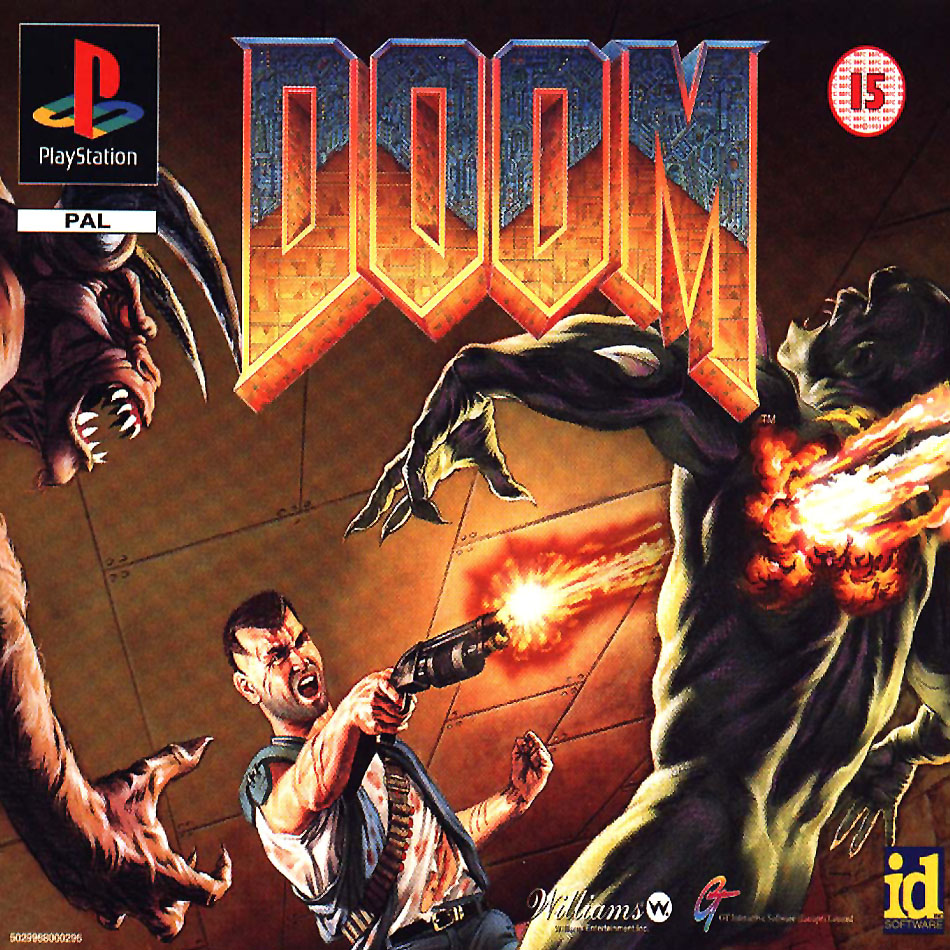
Doom pre alpha was build in Feb 1993.
Feb -1993
IT is like old school pixelated raw environment.
They had UI in the game to prototype and saw what was working and what wa not.
Had quite a few items that don't appear anymore such as a sandwich and a captain's hand!
March - 1993
20th Century Fox contacted them and they thought they would be the right team to make Aliens, the game. They were in the middle of building Doom, but had to stop to work on Aliens, as, who wouldn't work on Aliens?
E1M2 development
Second level of the game, forget cement walls, they were trying to make a level that didn't feel realistic but you could still vibe with something that was like a military space, but where you felt you were on a space station / moon (for the Aliens thingy).
They made then a room that changed the look of the game. Instead of high ceilings with banks of computers and detail, they were able to create a room that was an abstratction, almost an artistic choice to elevate and make things grow and be huge. This room was the start of the look that really defined DOOM. Instead of it being realistic, it was designed to match the tone of the game.
BUT THEN DISASTER STRUCK!
They had to stop working on Doom. The Super Nintendo version of Wolfenstein was not finished yet, and publisher (imagineer) was not pleased. They couldn't get a hold of the guy who was working on it, it was a nightmare situation. So they stopped work on Doom and everyone had to work on Wolfenstein.
They ported Wolfenstein 3D to the Super Nintendo in about 3 weeks - they worked 24 hours so they could get back on Doom.
Map E1M3 caused a problem - the game kept slowing down and chugging due to the way the game visuals. Instead of just pairing down the visual to a bunch of blocks, they figured out the best way they could fix using engine instead. Shows how communication and perseverance through a great group of people who have a common goal can find solutions to problems.
Thus, the BSP Tree was born - an algorithm that sped things up significantly. It affected the whole industry.
April 1993
New Alpha. Sent out to beta testers they had known for years. Frame rate was 2 dots, and there was 4mg of memory.
Doom was inspired by Aliens - deeper and deeper sense of dread, knowing there were scary experiences converged in an unknown room, knowing you had to make your way to the danger.
E1M7 - was so different from the actual release game. Still limited a lot of textures. Characters were still quite pixelated.
May 22 - 1993
Pre-Beta - it was getting more real, more textures, UI at the bottom i totally changed, there's even a final font! Markers and menu systems were taken from learnings from Wolfenstein.
August 1993
Creative Director parted ways with team, works on Wolfenstein, created Rise of the Triad, then in process realized all the project needed was creative happiness. This was not happening so this is why he left Doom at the time (went to Apogee Software).
Hired two more people to replace creative director. Jumped on the game, took over design and some programming to get to September. Loads of levels are getting done, got the DMX sound drivers done, had a guy named Paul Radec to come in to do these SFX.
October 1993
Pre-release of the game. 2 months away from release - texture, light, SFX are in there and you can see how much more atmospheric it is. Suggest to keep going over and over and over each area to improve and improve the look and effects.
Can now pick up items, track items, keep track of awards etc.
Wanted to get rid of arcade game rules such as having lives, if you get killed you just go back to beginning of level. Gives it a higher probability that players would be able to complete game.
Next revision would be the final game.
October 1993
Press release version - by November did first IPX Multiplayer is created. The word deathmatch is created along with that mode of play. Coop mode is created. All final systems are coded, intermission , menus, instalalation. Seriel code for modems was created. Game maps were modified for deathmatch and coop play
Usenet was going CRAZY!
December 10th 1993 -
30 hour stretch at the end running games on every machine. There was a last minute bug that was fixed (had to do do with timer code was happening).
Doom was uploaded via the programmers computer at the University of Wisconsin! Had to book a slot to do the upload, and it blew up the whole server. This happened twice.
Finally got uploaded and made it's way across the BBSs - went on to make DOOM2.
GDC11 - 1000s of Zombies, 1000s of Problems: Dead Rising 2 Multiplayer Experience
 So there were no sessions that really related to our work in this hour so I thought I'd go to a session that had zombies....
Dee Jay Randall (Capcom Game Studios)
Dead Rising 2 shipped shipped 2 million copies in first 20 days.
Co-op Design Objective
- Support franchise themes in co-op such as sandboxing, character levelling.
- Assumed that environment was densly populated and that coop players would not be competing or interacting that much.
- Opportunity was to minimize latency, to the point that it was indistinguishable from single player. In reality this doesn't always work, sometimes users do try to get into same vehicle at same time, or weapons.
Accomplishments
- used Distributed AI for zombies and items. Many thousands of these they had to manage. Entity sates (zombies, weapons etc) had to be distributed. Ownership reflected entity distance. Player interactions caused ownerhsip transfer.
- Earh peer advanced local simlulation of entities, communicates results to others, which minimized latency.
- Guests can join at any time (Join In Progress). guest brings the level, skills and inventory items and clothing with them.
- Character levelling, story restart maintains Chuck's level and skillls. In co-op, only host can save story progress. Gues can save Chuck's level and skill advancement.
- P2P - used for Zombies, player, props. each peer is the owner of a subset of game titles. Combined set of zombies for users might exceed maximum number of actual zombies you interact with. The interactive zombies are called peer zombies.
- P2P vs Client Server - Correctability - zombie position is easy to correct.
Mission state is however hard to correct. As a consequence, inconsisten prop positions won't snowball, and divergent mission state can break the story timeline.
- Data Structures - talked about file size saving for diferent objects and the logic that sends the information. Some items such as vehicles were treated better for presentation purposes, even though they don't have core uses. (eg wheels turning on truck).
- Authority transfer vs ownership - every peer can claim authority, then what they do in lower levels is the authority change triggers ownership results. It takes a bit more time and must be in sync on all peers.
DEAD RECKONING
- you know where an object will be in the future so it doesn't have a mind of it all - like a locally simulated object that is not going to behave balisticlly. Locally, they create a simulation that they know the peer is doing. If there is a difference, they need to tell peer to make difference so they can make adjustments. Goal is to correct prop position within 1 second.
JOIN IN PROGRESS
- requires large initial state transfer. Level state, Chuck state, mission state.
Tools
- most basic was an online logging system that streamed all system and gameplay events with periodic dumps of different game states such as chuck states.
This creates data, so we created a system that only displays logging for only that session.
- Auto Chuck takes a chuck, walking him around hitting weapons for testing, zombie killing and level switching. To get this to work online, connected two consoles in the co-op, then ran auto Chuck. This helped that they could find more bugs locally than testing online.
- Network Traffic
- incorporated network traffic perspectives into all tech design. This leveraged determinism in isolation.
Post-Mortem
- don't sync everything - sync what is important.
- online testing across three continents is important.
- client server was added fairly late in development, which was a mistake.
- missions in co-op created loads of work, many nuances.
- bugs that didn't happen in single player but happened as soon as you add a second player.
- Taking a feature online was done as a second pass. This was the biggest cost mistake. They had a core gameplayer team for single player features. AFter the fact they tried to make them work online, which doesn't work! Needed to go back and re-tweak, and had a lot of difficulty controlling time between core game play and when they could bring them online.
- always run bandwidth analysis before your are feature complete.
- low bandwisdth game play is low quality, even though it met fundamental requirements. It was sucky - would stutter, delays in object pick up, and content resolution caused item popping.
GDC11 - Donkey Kong Post Mortem (w/retro studios and nintendo panel)
Questions:
Donkey Kong leveling gets expodentially harder as it goes along - did you want the levels to intentionally get harder?
- wanted to make a game that gave the feeling of a wave form that gradually progressed in game play to give you that sense of excitement - it gave you some rests but overall ramped it harder and harder.
Any old games you'd like to see brought back to life?
- Doko Doki Pen
- We all are big nintendo fans and love going into the huge amount of history and worship them, you are not going to find any bigger nintendo fans than there are at Retro.
- Many have worked on nintendo products for 25 years and they are great for information and inspiration.
Really liked time trial mode - what was evolution of this?
- what we wanted in level design was making 'wow' moments in each level. Obviously it was something that came later in the game process (the time trial) - wanted to see how it worked.
- Really, the focus was more about enjoying the game, the trial mode was about allowing for more challenges within levels.
Donkey Kong leveling gets expodentially harder as it goes along - did you want the levels to intentionally get harder?
- wanted to make a game that gave the feeling of a wave form that gradually progressed in game play to give you that sense of excitement - it gave you some rests but overall ramped it harder and harder.
Any old games you'd like to see brought back to life?
- Doko Doki Pen
- We all are big nintendo fans and love going into the huge amount of history and worship them, you are not going to find any bigger nintendo fans than there are at Retro.
- Many have worked on nintendo products for 25 years and they are great for information and inspiration.
Really liked time trial mode - what was evolution of this?
- what we wanted in level design was making 'wow' moments in each level. Obviously it was something that came later in the game process (the time trial) - wanted to see how it worked.
- Really, the focus was more about enjoying the game, the trial mode was about allowing for more challenges within levels.
Wednesday, March 2, 2011
GDC11 - Panel: 120 Connected Users And Counting
- Of broadband consumers, over 20% already connecting their device to computer. Of type, gaming is 4th.
- by 2014 expect over 120 million connected tv units sold.
- Is this de-ja vu? It seems that every 20 years or so creators think interactive TV is going to work, and every time consumers think not.
1. Lance Koenders - Intel Digital Home Group
- Dept. coined the term 'smart tv' - category of products like smartphone, etc. It means unlimited access to content (eg browser, flash, html5), it has open app platform, has an immersive experience).
- TV market is in 3-400 mill units range, so 120 mill is not that big yet.
- seeing this transition happen quickly. Happening for much same reasons that it did for smartphone.
- platform must be open for people to participate. Beginnings of open OS are starting to appear. eg. Google TV was the first. Boxee, Meego, Win 7 embedded are starting to pop up.
- starting to have GPUs that rival Wii, and good performance to do Wii calibre shading.
- Intel has big investment in this tech. Fundamentally about driving PERFORMANCE.
- starting to talk in the playstation3 range on TVs in the not too distant future.
2. Gabriel, founder of Transgaming.
- Transgaming started as an end-user operated platform.
- One of the companies driving mac gaming today. Have also worked with Intel.
- cross platform is hard for developers. Even if you know what you're doing.
- created technology that takes existing windows based game technology, wrap it in their GameTree portability that allows PC based DirectC content to be easily run on TV.
- ANGLE provides OpenGL ES 2.0 on Windows. GameTreeTV allows GL passthrough to HW.
3. GameTree dude
- GameTreeTV - blend of digital distribution platform for Connected TV.
- Why not an app store? They look at the TV marketplace as a place for video on demand, on demand channels. GameTree allows on demand gaming platform.
- Categorizes and filters in the way that a cable channel like HBO On Demand does.
- has a rental or purchase model.
- GameTree TV has a developer Program.
- currently a developer competition with a prize of $50K
4. Legacy Interactive
- focused on random content. Mostly TV shows. First to take a drama (law and order) and turn it into a game.
- They 'gamify' tv properties.
- Release games on DS, PC, Mac etc.
Why processors on the TV Box and not the Cloud?
- Intel dude thinks there will be a place for both models.
- User experience shows users like to have a lot of personalization. When you take this flexibility (ownership pieces) away, desire goes away. If something is local, people know it persists.
- he is personally not convinced that streaming services will last long term. eg. not as accesible in rural markets.
- transgaming as something to get to more quickly.
Innovation?
- iphone changed the way people interact with content, will this happen with SmartTV?
- impressed at how many multi device games are appearing - used Scrabble as an exmaple. Play on your tablet, but the TV is a social device.
- "tablet is a personal device, TV is a social device" - how to make that work with dual device gaming.
- one thing they hope happens is to find a way to integrate live video streams into games (eg fantasy sports with live sports gaming).
Does an App Store work on a TV?
- No one truly knows if this will work or not. People are gravitating to TV in the expectation it will entertain them. Interactive like HBO, NETFLIX create a new experience with the same old premise - it's content that entertains.
- To do gaming in TV space, it's about presenting content, and present opportunity to jump in to that experience for 10 or 15 minutes as opposed to linear for 2 hours.
OS and Smart TV
- Wide range of different OS that are coming out. Fair diversity in cable operatives building on that also.
- Really try and isolate gaming app developers to bring a consistent user development environment.
ARE NETWORKS EMBRACING THIS TECHNOLOGY
- reality is that TV studios are making $$$ from broadcast of their shows across channels. When you go to them with a related game, they don't really care or bother as it's small change.
- when it comes to talking to studios about making a TV property related game to connected tv, it's a hard conversation.
- Also legal license issues - games can be seen as different to 'interactive tv' in how it relates to a TV property.
- don't want a TV game to compete with the viewers time with their tv channel.
- now, there's more discussion now than there used to be (even pre-CES 2011!)
GDC11 - Keynote Address: Satoru Iwata, President, Nintendo Corp.
Video Games Turn 25: A Historical Perspective and Vision for the Future"

About the speech:
For a quarter of a century, the engine of video games has been "must have"—the viral communication of what a gamer simply can't do without. Sometimes it's hardware, sometimes software, sometimes an accessory, but "must have" always describes an experience that can't be missed—the next big thing.
Along the way, innovation has continuously reinvented the game experience in terms of graphics, player control and pure game design. But in the process, part of the magic of those early days of game creation has been lost.
As a leading player during all 25 years of the modern video gaming era, Nintendo has a unique perspective on what makes gamers grin, what defines the term "gamer" and what is essential to ensuring industry growth.
Comments from bloggers:
CVG: Nintendo president Satoru Iwata has criticised 'quantity-obsessed' social and mobile creators, questioning whether developers in this model will be able to make a living in the future.
Speaking during his GDC keynote speech, Iwata argued that the video game business is splintering into two sides; one focused on quality, the other quantity.

About the speech:
For a quarter of a century, the engine of video games has been "must have"—the viral communication of what a gamer simply can't do without. Sometimes it's hardware, sometimes software, sometimes an accessory, but "must have" always describes an experience that can't be missed—the next big thing.
Along the way, innovation has continuously reinvented the game experience in terms of graphics, player control and pure game design. But in the process, part of the magic of those early days of game creation has been lost.
As a leading player during all 25 years of the modern video gaming era, Nintendo has a unique perspective on what makes gamers grin, what defines the term "gamer" and what is essential to ensuring industry growth.
Comments from bloggers:
CVG: Nintendo president Satoru Iwata has criticised 'quantity-obsessed' social and mobile creators, questioning whether developers in this model will be able to make a living in the future.
Speaking during his GDC keynote speech, Iwata argued that the video game business is splintering into two sides; one focused on quality, the other quantity.
One of the most important lessons of Iwata's career came early on, he said, when he expected his technically superior games to sell better than those of Mario and Zelda creator Shigeru Miyamoto.
“Mr. Miyamoto taught me a painful lesson: Content really is king,” Iwata said. “His games outsold mine by a huge margin. I found out then that engineering is not quite as important as imagination. To be honest, I was ashamed.”
Over the years, Iwata says he's learned “must have” universally appealing games tend to be the ones that challenge existing notions of what a game is and how it should play. The most successful games exploit the power of social connections and target audiences that don't traditionally play games, as well, he said.
Wired (blog):
At Nintendo’s keynote presentation Wednesday morning at Game Developers Conference, the company said the streaming movie service would be available on its new handheld game system by late summer. But perhaps more pertinent to the gamers in attendance was news that the team behind the stellar Super Mario Galaxy is creating a new game in the series for the glasses-free 3-D handheld.
The keynote, presented by Nintendo President Satoru Iwata with a brief appearance from Nintendo of America chief Reggie Fils-Aime, was otherwise light on substance. Iwata discussed his views on what makes a gaming experience a “must-have” phenomenon, and Fils-Aime said that 10,000 AT&T Wi-Fi hot spots in the United States would let 3DS owners log in and play games for free starting in late May.
“Mr. Miyamoto taught me a painful lesson: Content really is king,” Iwata said. “His games outsold mine by a huge margin. I found out then that engineering is not quite as important as imagination. To be honest, I was ashamed.”
Over the years, Iwata says he's learned “must have” universally appealing games tend to be the ones that challenge existing notions of what a game is and how it should play. The most successful games exploit the power of social connections and target audiences that don't traditionally play games, as well, he said.
Wired (blog):
At Nintendo’s keynote presentation Wednesday morning at Game Developers Conference, the company said the streaming movie service would be available on its new handheld game system by late summer. But perhaps more pertinent to the gamers in attendance was news that the team behind the stellar Super Mario Galaxy is creating a new game in the series for the glasses-free 3-D handheld.
The keynote, presented by Nintendo President Satoru Iwata with a brief appearance from Nintendo of America chief Reggie Fils-Aime, was otherwise light on substance. Iwata discussed his views on what makes a gaming experience a “must-have” phenomenon, and Fils-Aime said that 10,000 AT&T Wi-Fi hot spots in the United States would let 3DS owners log in and play games for free starting in late May.
Monday, January 17, 2011
Sesame Street Science: Learn from Cookie Monster
via Wired:
esame Street have created a great little YouTube project which sees Cookie Monster and his friend Emma producing interactive science experiment games through YouTube. In this experiment called “Sink or Float?” viewers are asked to choose the items they think will sink or float in water.
It comes complete with what you’d expect from the producers of fine educational media – witty, engaging and full of great learning moments. If your kids are between 4 -8 years, show them this today!
http://www.wired.com/geekdad/2011/01/sesame-street-science-learn-from-cookie-monster/
esame Street have created a great little YouTube project which sees Cookie Monster and his friend Emma producing interactive science experiment games through YouTube. In this experiment called “Sink or Float?” viewers are asked to choose the items they think will sink or float in water.
It comes complete with what you’d expect from the producers of fine educational media – witty, engaging and full of great learning moments. If your kids are between 4 -8 years, show them this today!
http://www.wired.com/geekdad/2011/01/sesame-street-science-learn-from-cookie-monster/
Monday, January 10, 2011
Tuesday, December 7, 2010
Videos: The Best Kinect Hacks And Mods One Month In
viva crunch gear
"Seeing how the Kinect is just over a month old, it’s ’bout we round up the best hacks so far and seriously, judging by the list of accomplishments done in just over 30 days, the Kinect will probably be playing us this time next year."
http://www.crunchgear.com/2010/12/07/videos-the-best-kinect-hacks-and-mods-one-month-in/
"Seeing how the Kinect is just over a month old, it’s ’bout we round up the best hacks so far and seriously, judging by the list of accomplishments done in just over 30 days, the Kinect will probably be playing us this time next year."
http://www.crunchgear.com/2010/12/07/videos-the-best-kinect-hacks-and-mods-one-month-in/
Thursday, December 2, 2010
More experiments with Kinect
Body Dysmorphic Disorder
Body Dysmorphic Disorder from flight404 on Vimeo.
Made with Cinder and the Kinect sensor. Runs in realtime.
Nipple Tracker (ah... here is the future of this technology)
Kinect Titty Tracker from Dan Wilcox on Vimeo.
A simple Open Frameworks application using the MS Kinect depth sensing camera via libfreenect and ofxKinect.
Body Dysmorphic Disorder from flight404 on Vimeo.
Made with Cinder and the Kinect sensor. Runs in realtime.
Nipple Tracker (ah... here is the future of this technology)
Kinect Titty Tracker from Dan Wilcox on Vimeo.
A simple Open Frameworks application using the MS Kinect depth sensing camera via libfreenect and ofxKinect.
Tuesday, November 23, 2010
Thursday, November 4, 2010
Monday, August 2, 2010
Wednesday, July 7, 2010
Subscribe to:
Posts (Atom)